Glass vs Cable vs Aluminum Railings in Birmingham, MI
Walk through a Birmingham renovation and the railing conversation usually starts the same way. The homeowner likes glass, the builder mentions cable, and the stair supplier quotes aluminum balusters. At First Class Glass we install glass railing systems across Southeast Michigan, so we have a bias, but all three options are legitimate and all three behave very differently on a real staircase.
Our other railing posts cover cost, trends, and code. This one is about the decision itself. Here is how glass, cable, and aluminum compare on sightlines, code, structure, weather, and upkeep, so you can choose before anyone orders hardware.
What You Are Actually Choosing Between
The posts and top rail can look similar from across the room. What changes is the infill, the part that fills the space between them and does the real work of keeping people safe.
- Glass: tempered or laminated panels held by posts, standoffs, or a base channel.
- Cable: stainless steel cables tensioned horizontally between posts.
- Aluminum: vertical balusters, usually powder coated, set between a bottom rail and a top rail.
Viewrail is a handy place to see all three side by side, since its catalog covers glass, cable, and rod infill, and its glass systems are built around either 1/2 inch tempered or 9/16 inch laminated panels.
Sightlines: How Much of the View You Keep
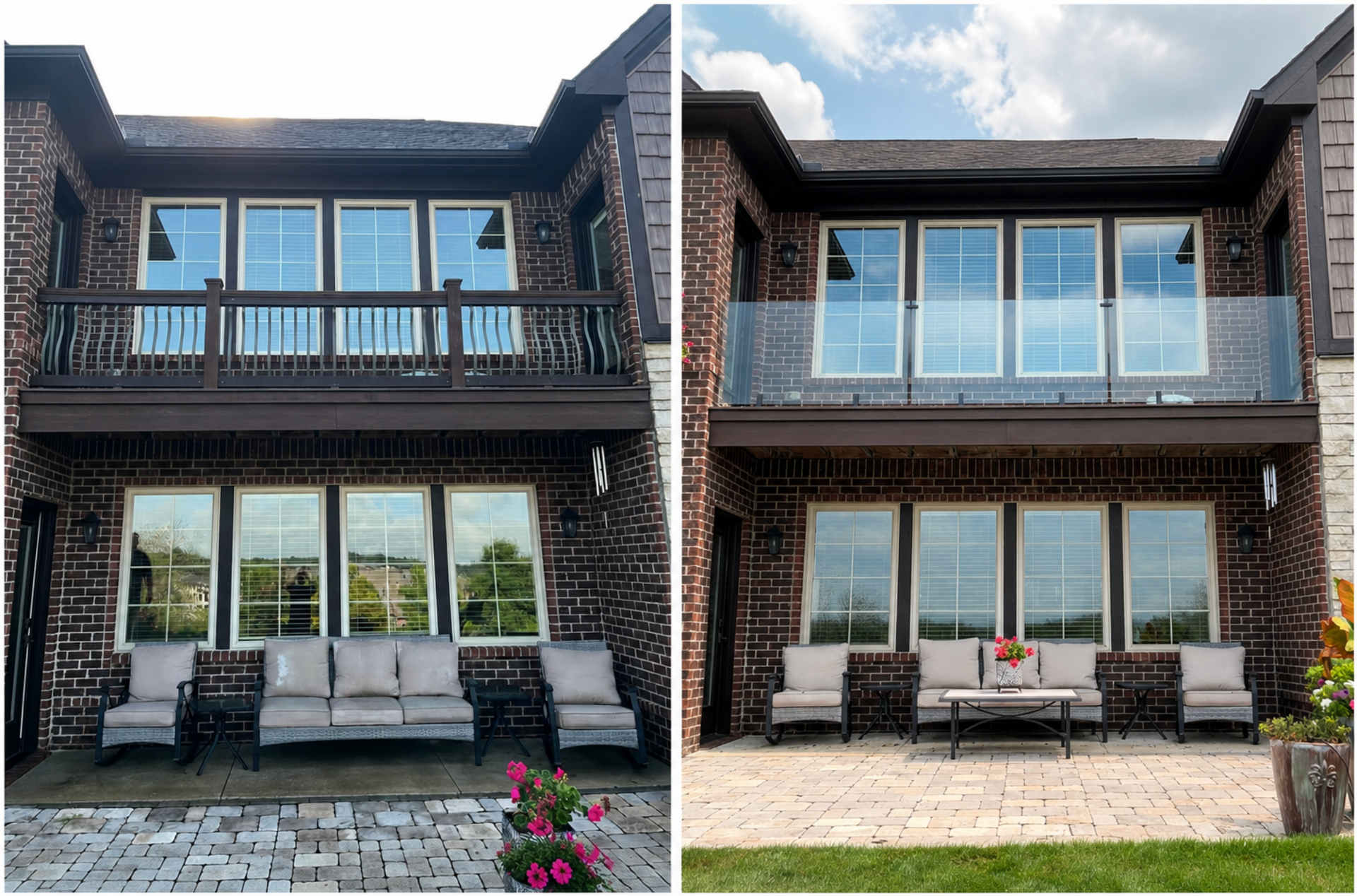
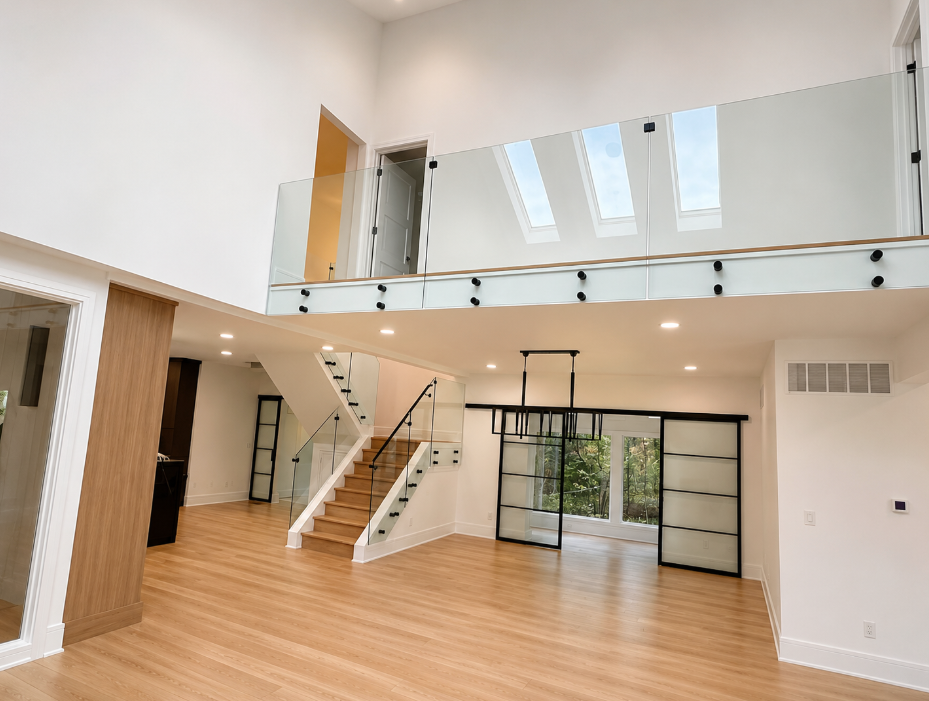
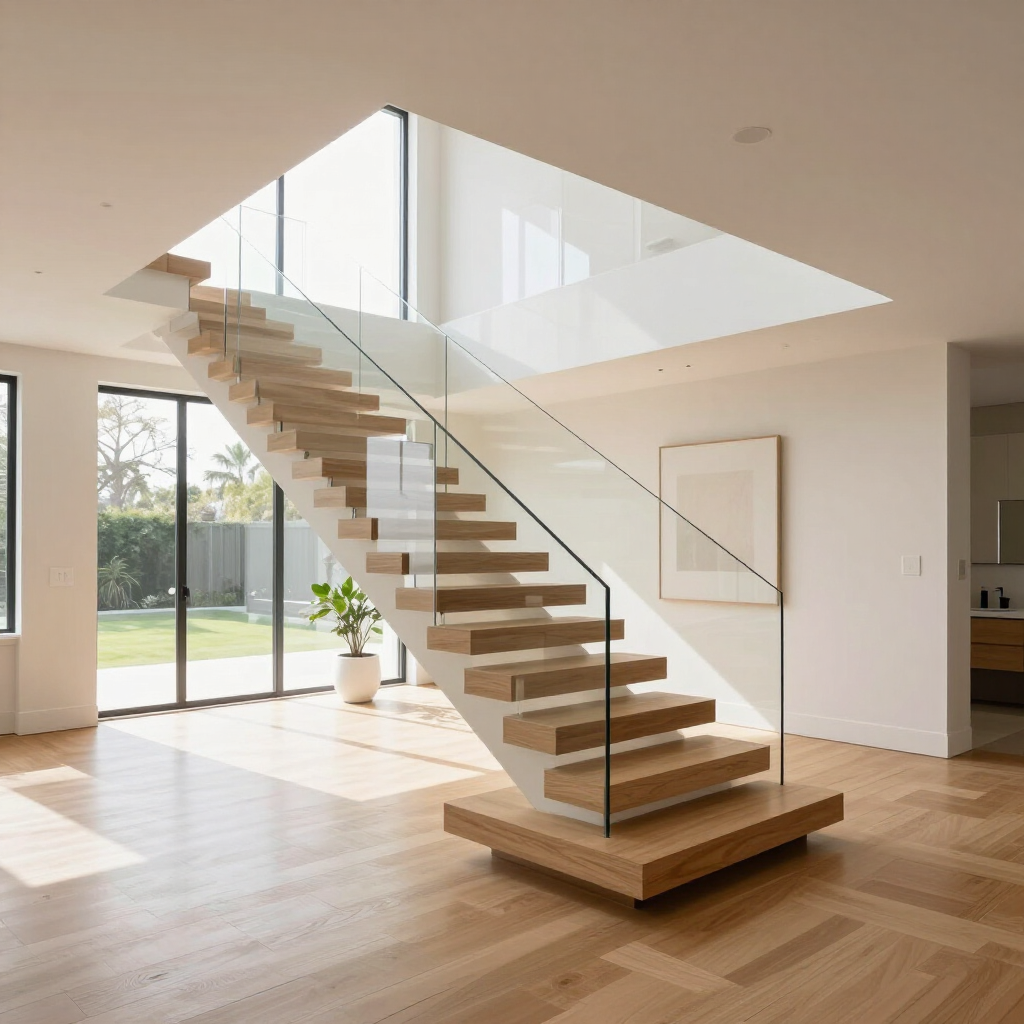
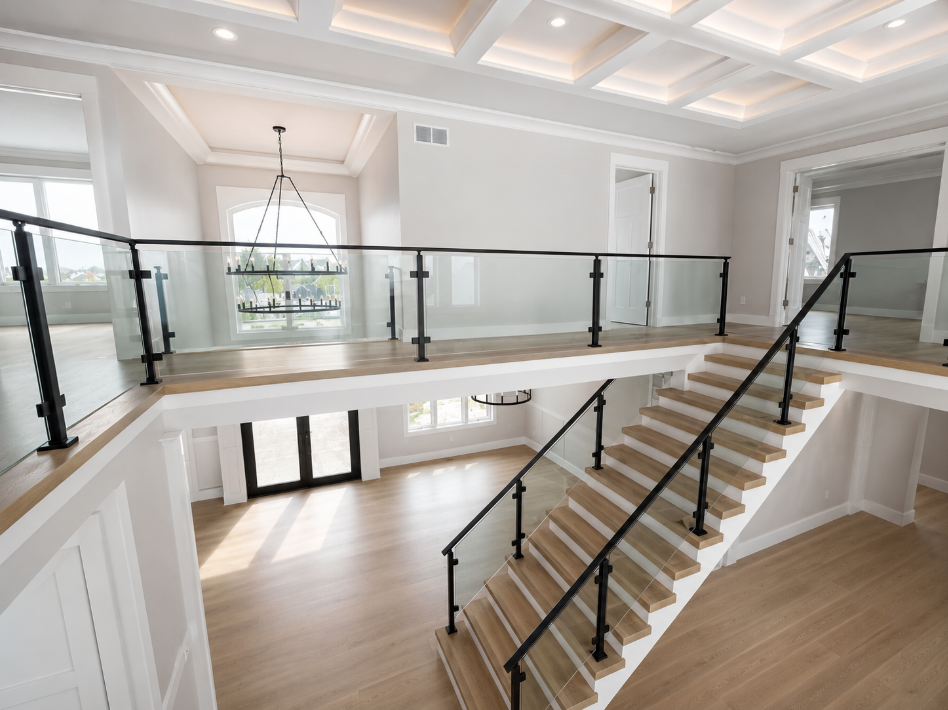
Glass keeps the whole view and passes light through the staircase. Nothing crosses your line of sight, which is why a good glass system seems to disappear once the room is finished. On a floating stair or an open foyer, that is the entire point of the railing.
Cable is thinner than a baluster, but it is still a grid. To hold a 3 1/8 inch spacing on a 36 inch guard, one supplier calls for 10 separate cable runs. That is ten horizontal lines between you and the yard. Aluminum balusters are the most visible of the three, because every vertical picket is a line the eye has to look past.
Code: The 4 Inch Sphere Rule Hits Cable Hardest
Every guard has to stop a 4 inch sphere from passing through its openings. Rigid infill, like glass panels or aluminum balusters, can meet that with a simple layout. Cable moves when you push it, so the cables must be tensioned and spaced tightly enough, commonly around 3 inches, that the gap still passes the test under load.
Stairs add exceptions. The open side of a stair allows a 4 3/8 inch sphere, and the triangle formed by the tread, the riser, and the bottom rail can be up to 6 inches. Any system we propose gets checked against these numbers before fabrication, and the final layout still needs to satisfy your local building department.
Structure: What the Posts Have to Carry
A tensioned cable pulls on the posts at both ends, so end post construction matters a great deal. Poorly built end posts are one of the main reasons cables cannot be tensioned without unacceptable deflection. Post spacing matters too, and a common guideline is a post about every 4 feet to keep cable movement in check.
Cables also lose tension over time, which is why a proper system includes fittings you can adjust. Glass shifts the question to the substrate. The panels, standoffs, or base shoe are only as sound as the framing behind them, so blocking and structural prep decide whether the railing performs the way it looks.
Michigan Weather: Freeze and Thaw, Salt, and Wind
Glass itself does not care about winter. The hardware is where Michigan shows up. Viewrail offers its posts in aluminum, 304 stainless, and 2205 stainless, and positions 2205 as the choice for added corrosion protection, which is worth considering for a deck exposed to snow, salt, and standing water.
Wind is the other variable. A glass guard on an exposed deck can block a prevailing breeze, which many owners love and some do not. For homeowners comparing exterior glass balcony railing options, we walk the space first, because orientation changes the answer.
Upkeep: What You Will Actually Do Each Year
Glass needs regular cleaning and an occasional wipe of the hardware. Cable needs periodic checks of the tension and a look at the fittings. Aluminum needs washing and, over the years, touch ups where the powder coat has chipped.
None of these is a heavy burden. The real difference is that cable is the only one with a part that can drift out of adjustment on its own, so it is the one you should plan to inspect.
Where Aluminum Balusters Still Make Sense
Aluminum earns its place on traditional homes, on projects with a firm budget, and in spaces where you actually want some visual separation. Vertical balusters also suit families who would rather not have horizontal lines that a small child could treat as a ladder.
If your home is a center hall colonial and the architecture asks for a classic rhythm, a glass railing can look out of place. Choosing the right system means respecting the house.
Where Cable Railing Is a Fair Call
Cable is a reasonable choice for long deck runs where the view matters and the budget is tighter. Viewrail notes that cable and rod railing cost less up front than glass, and that is a real advantage on a long run.
The tradeoff is tension, post construction, and a visible grid. If you go this route, insist on a detailed post plan and adjustable fittings.
Why Glass Tends to Win in Birmingham
Many Birmingham homes are built around open plans, large windows, and staircases meant to be seen. In those homes, frameless glass railings for staircases protect the architecture instead of competing with it. We covered the demand side of that shift in the release titled First Class Glass Says “Invisible Staircase” Trend Sweeps Birmingham as Luxury Homeowners Demand Frameless Glass Railings and Floating Stairs.
That said, glass is not automatically right. It asks for precise measuring, careful structural prep, and fabrication that cannot be changed once the glass is tempered. A custom glass railing installation in Birmingham works best when the stair has been measured in person.
Questions to Ask Any Installer Before You Sign
Whatever system you lean toward, these questions separate a clean installation from an expensive correction.
- How will the system be checked against the 4 inch sphere rule, including on the stair?
- What is the post plan, and what is behind the wall or deck framing?
- Which glass type is proposed, tempered or laminated, and why?
- What material is the hardware, and how does it hold up to Michigan salt and moisture?
- Who handles the permit, and who is on site for final measurements?
Plan Your Railing With First Class Glass
If glass is on your shortlist, we are happy to walk the staircase, talk through the alternatives honestly, and tell you when another system fits better. Request a free glass railing estimate and we will take it from there.
You can also call the Waterford office at 248.206.3612. We are open Monday through Friday, and weekends by appointment.